
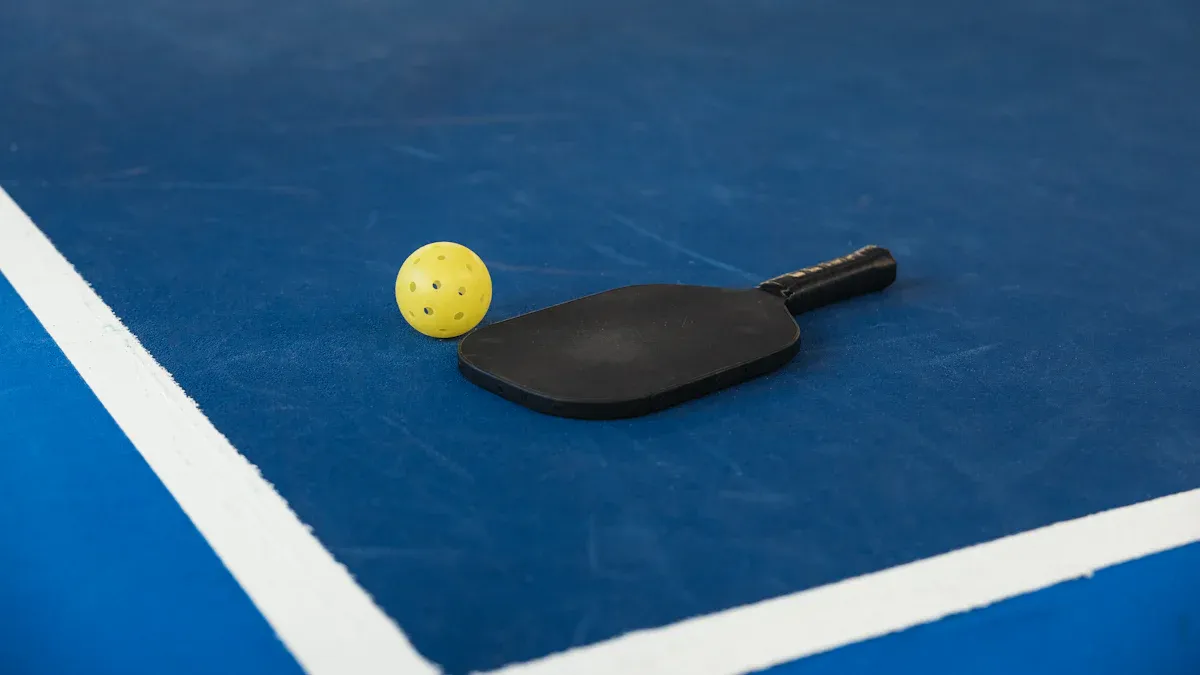
Pickleball is booming! With so many new players, you need to know the 5 rules: double bounce, non-volley zone, serving, scoring, and faults. Mastering these helps you play with confidence and avoid common mistakes.
Did you know?
- Pickleball grew by 51.8% from 2022 to 2023.
- Over 48 million Americans tried it last year.
- Courts and tournaments keep popping up everywhere.
You’ll find these rules simple to learn. Practice them, and you’ll see your skills and confidence soar.
Key Takeaways
- Let the ball bounce once on each side after the serve before volleying to keep rallies fair and strategic.
- Avoid hitting the ball in the non-volley zone (the kitchen) to prevent faults and keep the game safe.
- Serve underhand and diagonally past the non-volley zone to start points correctly and avoid faults.
- Score points only when your team serves, and always call the score clearly before serving to keep the game fair.
- Learn to spot and avoid common faults like foot faults and kitchen violations to improve your game and win more matches.
The 5 Rules Overview
Ready to jump into pickleball? You only need to remember the 5 rules to get started. These rules keep the game fair, fun, and easy to follow. Let’s take a quick look at each one:
Double Bounce
You must let the ball bounce once on each side after the serve before anyone can hit it out of the air. This double bounce rule slows down the action and gives you time to react. It helps you focus on control and placement, not just power. Many beginners love this rule because it makes rallies longer and the game more strategic.
Non-Volley Zone
The non-volley zone, also called the kitchen, is a 7-foot area on both sides of the net. You can’t hit the ball out of the air while standing in this zone. This rule stops players from smashing the ball right at the net and keeps things fair. You’ll need to plan your shots and move smartly around the court.
Serving
Serving in pickleball has its own set of rules. You must serve underhand and hit the ball diagonally across the court, past the non-volley zone. There are two legal serve types: volley serve and drop serve. Serving within the boundaries sets up each point and keeps the game organized.
Scoring
You score points only when your team serves. The first team to reach 11 points (and lead by at least 2) wins. Players switch sides and rotate servers to keep things fair. Scoring mistakes can cost you the game, so pay attention! Check out this table to see how errors affect outcomes:
| Statistic / Finding | Value / Description |
|---|---|
| Points scored from unforced errors | 28% to 40% of total points per game |
| Win rate of team with fewer unforced errors | ~70% of games won |

Faults
A fault happens when you break one of the 5 rules, like hitting the ball out or stepping into the kitchen on a volley. Faults stop play and give the other team a chance to score. Learning to avoid faults helps you win more games.
Mastering these 5 rules gives you the foundation you need to play pickleball the right way. They make sure every match is fair, safe, and fun for everyone.
Double Bounce
Rule Explanation
The double bounce rule is one of the first things you’ll learn in pickleball. You might also hear it called the Two-Bounce Rule. Here’s how it works:
- When you serve, the ball must bounce once on the other side before your opponent can hit it.
- After your opponent returns the ball, you must let it bounce once on your side before you hit it back.
- Only after these two bounces—one on each side—can you start volleying (hitting the ball in the air).
This rule comes straight from the official pickleball rule book. It keeps the game fair and stops players from rushing the net right away. You’ll notice that the serve must always go diagonally and land past the non-volley zone line. Without this rule, games would end quickly because the serving team could dominate with fast volleys. The double bounce rule makes rallies longer and more exciting for everyone.
How It Applies
You’ll see the double bounce rule in action every time you play. After the serve, both teams must wait for the ball to bounce before hitting it. This means you can’t smash the ball out of the air right away. The rule forces you to think about your position and timing. It also gives you a chance to get ready for the next shot.
This rule changes the flow of the game. Instead of quick points, you get longer rallies and more chances to show your skills. You’ll find yourself planning your moves and working with your partner to set up the point. The double bounce rule makes every rally more strategic and fun.
Tip: Stay patient during the first two shots. Let the ball bounce, then get ready to move!
Common Mistakes
Many players, even those with experience, slip up with the double bounce rule. Here are some mistakes you’ll want to avoid:
- Hitting the return before it bounces. This is the most common error, especially for beginners.
- Rushing forward too soon. If you move up before the second bounce, you might get caught out of position.
- Misjudging the bounce. Sometimes you think the ball will bounce higher or lower than it does, leading to weak returns or faults.
Some players think the rule only applies to the serve, but it actually covers both the serve and the return. If you volley before the two bounces, you lose the point or the serve. The double bounce rule teaches you patience and smart positioning. Focus on letting those first two shots bounce, and you’ll avoid easy mistakes!
Non-Volley Zone
Rule Explanation
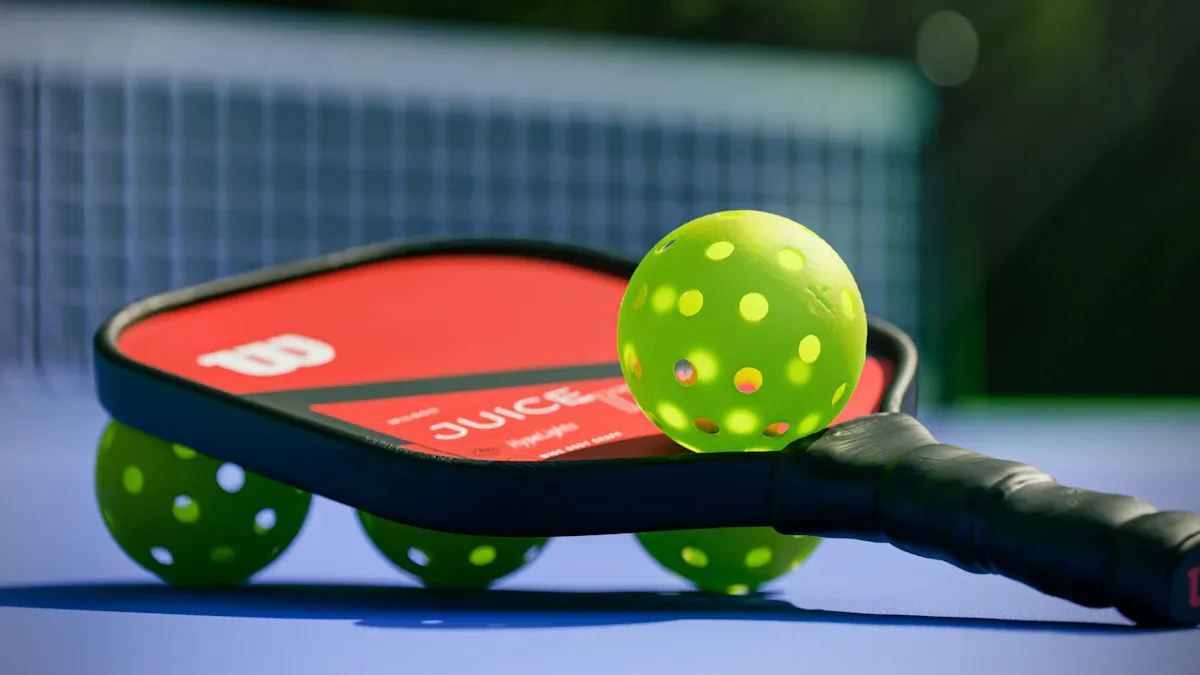
The non-volley zone, or “the kitchen,” is a special area on both sides of the net. You’ll see a 7-foot space marked off from the net toward each baseline. The main rule is simple: you can’t hit the ball out of the air (volley) while standing in this zone or touching its lines. If the ball bounces in the kitchen, you can step in to hit it, but you must get both feet back outside before volleying again. The official rulebook even shows diagrams of this area, with a center line dividing the kitchen into left and right sides. This rule keeps the game fair and stops players from crowding the net for easy smashes.
Tip: Always check your feet before you volley near the kitchen. If you touch the line or step inside, it’s a fault!
Application in Play
You’ll notice that many points end near the non-volley zone. Players who control this area often win more rallies. In fact, studies show that over a third of finishing shots happen right at the kitchen. When you play close to the kitchen line, you can reach more balls and put pressure on your opponents. Smart players use volleys and dinks here to set up winning shots. If you keep your opponents behind the baseline, they’ll make more mistakes—over 60% of points end because of unforced errors from the back of the court. Mastering your footwork and paddle skills around the kitchen gives you a big advantage.
Mistakes to Avoid
Many players struggle with the kitchen rules, especially during fast rallies. Here are some common mistakes:
- Standing too close to the kitchen line, which makes you an easy target for lobs and sharp angles.
- Forgetting to move up to the kitchen, letting your opponents take control of the net.
- Stepping into the kitchen or touching the line while volleying—this is always a fault.
- Letting your momentum carry you into the kitchen after a volley.
- Using too much power near the kitchen or not talking with your partner.
To avoid these errors, stay about a foot behind the kitchen line when volleying, keep your paddle up, and practice stopping quickly. Good footwork and teamwork help you stay sharp and avoid faults. 🏓
Serving
Underhand Serve
You always start a pickleball rally with an underhand serve. This is the standard serve in the game. You must stand behind the baseline with at least one foot on the ground. Make sure both feet stay behind the line until you hit the ball. Swing your paddle underhand, keeping the motion smooth and controlled. The ball should clear the net and land in the opposite service court.
- The serve must be underhand.
- At least one foot stays behind the baseline.
- You can only step over the line after you hit the ball.
- If you step on or over the baseline before serving, it’s a fault.
Tip: Focus on consistency. A steady serve helps you start each point strong.
Many players use different underhand serves. Some hit the ball high and deep, while others keep it low and fast. Advanced players add spin or aim for the corners to make returns harder. No matter your style, always aim for accuracy.
Diagonal Serve
You must serve diagonally across the court. The ball needs to land in your opponent’s service box, past the non-volley zone. If your serve touches the net but still lands in the correct box, you get to replay the serve. This is called a “let serve.” If the ball lands out of bounds or in the kitchen, it’s a fault.
- Serve diagonally into the opponent’s service court.
- The ball must clear the non-volley zone.
- Let serves are replayed.
Practicing your aim helps you avoid faults and keeps the game moving.
Serving Sequence
Pickleball has a unique serving order. You announce the score before each serve. Only the serving team can score points. After a fault, the serve passes to your partner or the other team, depending on the game format.
Serving first can give your team an edge, especially in longer games. Studies show that teams with the stronger server starting first win more often in games to 15 points. The order of servers matters, so plan your lineup carefully.
| Situation | 5.0 Players | 4.0 Players |
|---|---|---|
| % able to get fully forward after third shot only | 54% | 38% |
| % able to get fully forward after third shot or one additional shot | 80% | 68% |
Moving forward after your serve helps you control the net. Try a soft third shot to get your team up to the kitchen line and keep the advantage.
Scoring
How to Score
You score points in pickleball only when your team serves. If you win a rally while serving, you get a point. If you lose the rally, the serve goes to your partner or the other team. Most games play to 11 points, but you must win by at least two points. This rule keeps games close and exciting.
Pickleball uses a traditional side-out scoring system. Here’s a quick look at how it works:
| Aspect | Description |
|---|---|
| Traditional Side-Out Scoring | Points go only to the server. Lose the rally, and the serve switches sides. |
| Serving Position (Singles) | Serve from the right if your score is even, left if it’s odd. |
| Serving Position (Doubles) | First server starts on the right. Servers switch sides after scoring. Each team gets two servers per turn. |
| Winning Condition | You must win by two points, so games can go past 11 if needed. |
Several rating systems like GOPR, IPTPA, UTPR, and WPR help keep scoring fair. These systems use real match data and expert reviews to rate players. They make sure you play against people with similar skills. This approach builds trust and keeps games balanced. The DUPR system even uses a special algorithm to track your performance over time. It helps you see your progress and play fair matches.
Switching Sides
You switch sides during the game to keep things fair. In singles, you serve from the right when your score is even and from the left when it’s odd. In doubles, both players on a team get a chance to serve before the other team takes over. After each point, the server switches sides with their partner. This pattern keeps everyone moving and makes sure no one has an advantage from one side of the court.
If you reach the winning score and both teams have played an even number of points, you switch sides to balance out any court differences. This rule helps everyone get a fair shot, no matter which side they start on.
Score Calling
Calling the score is a big part of pickleball. You must say the score before every serve. In doubles, you call three numbers: your team’s score, the other team’s score, and whether you are the first or second server. For example, “4-2-1” means your team has 4 points, the other team has 2, and you are the first server.
Clear and loud score calling keeps the game running smoothly. It helps everyone know what’s happening and avoids confusion or arguments. Good score calling shows respect and builds a positive atmosphere on the court. When you call the score honestly, you help create a strong and friendly pickleball community.
- Always call the score before serving.
- Speak clearly so everyone hears you.
- Stay honest and keep the game fun for everyone.
With these habits, you make sure every match is fair and enjoyable for all players.
Faults
What Is a Fault
A fault in pickleball happens when you break a rule and the rally ends. You might hit the ball out of bounds, step into the kitchen during a volley, or serve incorrectly. When a fault occurs, the ball becomes dead, and the other team gets a chance to serve or score. The official rulebook lists many actions that count as faults. Here are some examples:
- Stepping on or over the baseline while serving
- Hitting the ball before it bounces twice after the serve
- Touching the net with your paddle or body during play
- Volleying while standing in the non-volley zone (the kitchen)
- Hitting the ball out of bounds or into the net
You are expected to call your own faults, which keeps the game fair and builds good sportsmanship.
Common Faults
You will see some faults more often than others, especially if you are new to pickleball. Beginners tend to make more mistakes, and that is normal. In fact, a study found that players below a 4.0 skill level made unforced errors on almost half of their shots—about 46.6%. Advanced players made far fewer mistakes, only about 9%. Here are the most common faults you might encounter:
- Foot faults: Stepping on or over the baseline before serving
- Service faults: Serving above your waist or into the wrong court
- Kitchen violations: Volleying or stepping into the kitchen at the wrong time
- Double hits: Hitting the ball twice in one shot
- Out of bounds: Sending the ball outside the court lines
| Player Skill Level | Shots per Game | Unforced Errors per Game | Unforced Error Rate |
|---|---|---|---|
| Limited to Average (<4.0) | 162 | 76 | 46.6% |
| Advanced (4.0+) | 180 | 6 | 9% |
Most new players do not realize how much these faults affect their game. Learning to spot and avoid them helps you improve faster.
Avoiding Faults
You can cut down on faults with a few simple habits. Start by asking a coach or friend to watch your game and point out patterns. Practice drills that focus on serving, footwork, and shot accuracy. Set small goals, like reducing your unforced errors by a certain number each week. Try these tips:
- Focus on your feet during serves and volleys
- Practice hitting into the correct service box
- Work on your kitchen awareness with dinking drills
- Use controlled breathing to stay calm under pressure
- Treat mistakes as learning moments, not failures
🏓 Consistent practice and a positive attitude will help you make fewer faults and enjoy the game even more!
Mastering the 5 rules sets you up for fair and fun pickleball games. When you practice these basics, you build confidence and improve your skills. Try these tips to boost your game:
- Focus on making consistent, accurate shots.
- Plan each point and stay positive, even if you miss.
- Use your whole body and get ready for fast drives.
Grab your paddle and get out on the court. You’ll see progress every time you play!
FAQ
What happens if you step into the kitchen while volleying?
If you step into the kitchen or touch the line during a volley, you commit a fault. The other team gets the point or serve. Always check your feet before you hit the ball in the air near the net.
Can you hit the ball before it bounces on the serve?
No, you cannot. You must let the serve bounce once on your side before you return it. This is part of the double bounce rule. If you volley the serve, the other team wins the rally.
How do you know who serves first in pickleball?
You can flip a coin, spin a paddle, or use any fair method to decide who serves first. Many players just agree or take turns. The important thing is that both teams know and agree before the game starts.
What should you do if you forget the score?
Tip: If you forget the score, ask your partner or the other team. Stay honest and work together to remember. Calling the score before every serve helps everyone keep track and avoids confusion.