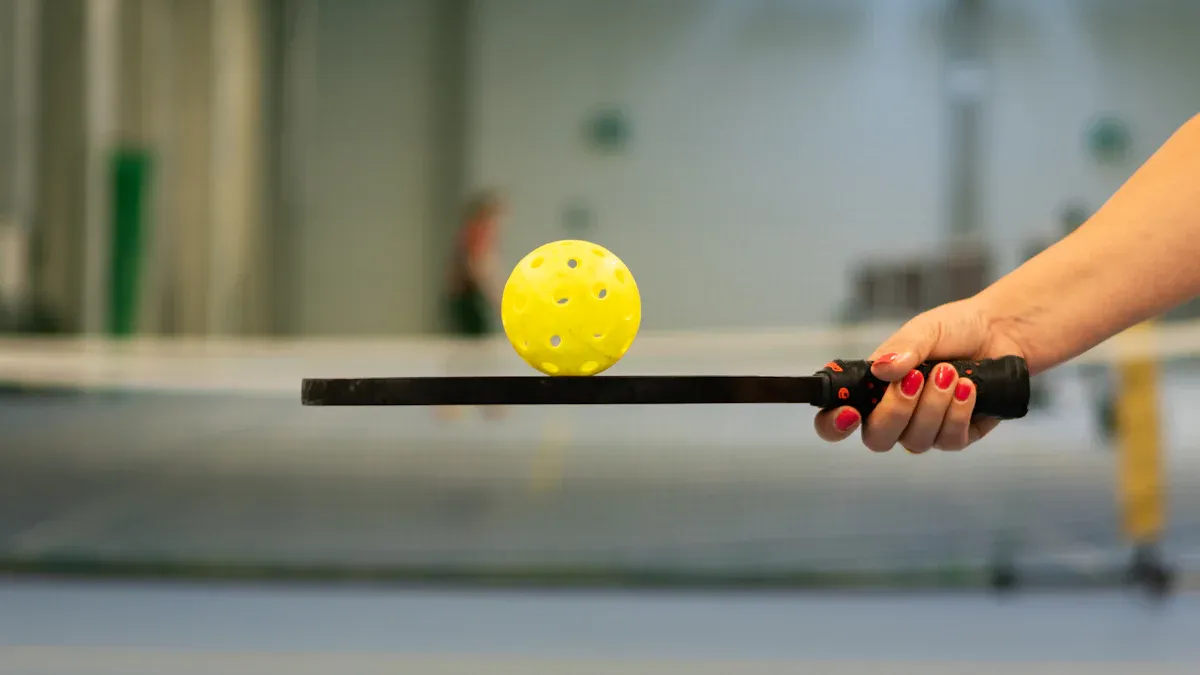
You want to hold paddle with a relaxed and steady hand. Most players start with a neutral or continental grip. This helps you control your shots and react quickly. Keep your grip gentle, not tight. If you squeeze too hard, you lose feel and control.
Key Takeaways
- Start with a relaxed, neutral (Eastern) grip to control shots and avoid wrist strain. This grip feels natural and works well for most shots.
- Use the Continental grip for quick volleys and net play. It helps you switch fast between forehand and backhand but may feel awkward for some shots.
- Keep your grip gentle, like holding a small bird, to maintain control and avoid fatigue. Adjust grip strength for different shots to improve power and precision.
Hold Paddle Basics
Neutral (Eastern) Grip
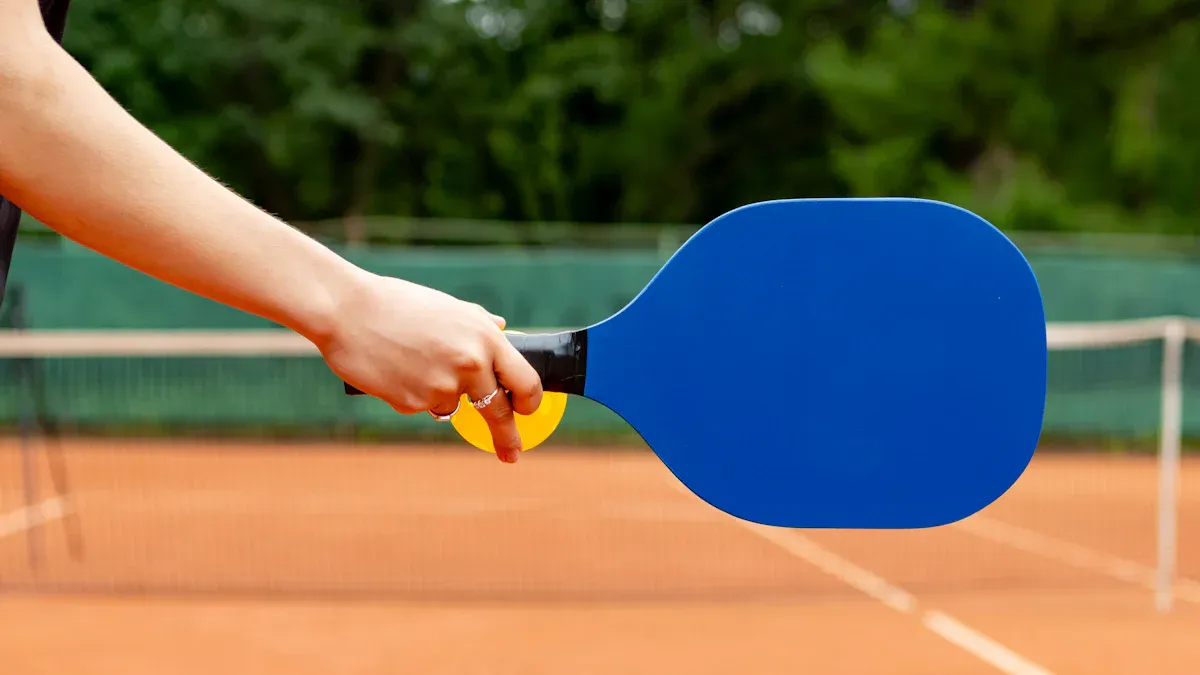
The Neutral or Eastern grip is the most popular way to hold paddle in pickleball. Many coaches call it the “shake hands” grip because it feels just like shaking someone’s hand.
How to get the Eastern grip:
- Place your playing hand flat on the face of the paddle.
- Slide your hand down until you reach the handle.
- Wrap your fingers around the handle as if you are shaking hands with it.
This grip feels natural and comfortable. You will notice your knuckles line up with the paddle’s edge. Your wrist stays in a neutral position, which helps you swing smoothly and avoid strain.
Tip: The Eastern grip gives you a solid base for learning. It works well for both forehand and backhand shots. You can hit flat shots and keep good control.
Pros:
- Easy to learn and feels natural.
- Helps you make clean contact with the ball.
- Reduces the risk of wrist injuries.
- Lets you switch quickly to other grips if needed.
- Works for most shots, especially at waist height.
Cons:
- May not give as much spin as advanced grips.
- Some players want more power or angle for special shots.
If you are new to pickleball, start with this grip. It helps you build good habits and makes it easier to adjust as you improve.
Continental Grip
The Continental grip is another common way to hold paddle, especially if you play close to the net. Some people call this the “hammer” grip because you hold the paddle like you would hold a hammer.
How to get the Continental grip:
- Hold the paddle as if you are about to hammer a nail.
- Your thumb and index finger form a “V” shape on top of the handle.
- The paddle face points slightly upward.
This grip works well for quick volleys and blocks at the kitchen line. You can switch between forehand and backhand without changing your grip.
Note: The Continental grip makes backhand shots easier. You can defend fast balls at the net with less effort.
Pros:
- Great for volleys and quick reactions.
- Lets you switch between forehand and backhand fast.
- Useful for blocking and dinking at the net.
Cons:
- Forehand shots can feel awkward.
- Not as strong for powerful drives.
Try this grip when you want to play at the net or need to react quickly. You may need to adjust your grip for groundstrokes.
Tennis Racket and Penhold Grips
Some players use grips from other sports. The tennis racket grip is similar to the Eastern or Continental grip but may feel different if you have played tennis before. The penhold grip, borrowed from table tennis, is less common in pickleball.
Tennis Racket Grip:
- Hold the paddle like you would hold a tennis racket.
- This grip feels familiar if you have a tennis background.
- It can help with topspin and slice shots.
Penhold Grip:
- Hold the paddle as if you are holding a pen.
- Your thumb and index finger pinch the handle, and the rest of your fingers wrap around the back.
- This grip gives you quick wrist action but less reach and power.
Tip: Most pickleball players do not use the penhold grip. It can limit your range and make it harder to hit strong shots.
Pros and Cons Table:
| Grip Type | Pros | Cons |
|---|---|---|
| Eastern (Neutral) | Easy, natural, safe for beginners | Less spin, less power for advanced |
| Continental | Fast switching, great for volleys | Awkward forehand, less power |
| Tennis Racket | Familiar for tennis players, spin | Not always best for pickleball shots |
| Penhold | Quick wrist action | Less reach, less power |
Adjusting Grip Strength
How tightly you hold paddle matters. If you grip too hard, your hand gets tired and you lose control. If you grip too loosely, the paddle may twist in your hand.
- Neutral grip strength: Hold paddle with gentle pressure, like holding a small bird. This gives you control and feel.
- Strong grip: Squeeze harder for power shots, but only for a moment.
- Weak grip: Loosen your grip for soft shots or dinks.
Tip: Most of the time, keep your grip relaxed. Tighten only when you need extra power.
Changing your grip strength helps you adjust to different shots. Practice switching between soft and firm grips so you can react to any ball.
Hand, Finger, and Pressure Tips
Finger Placement
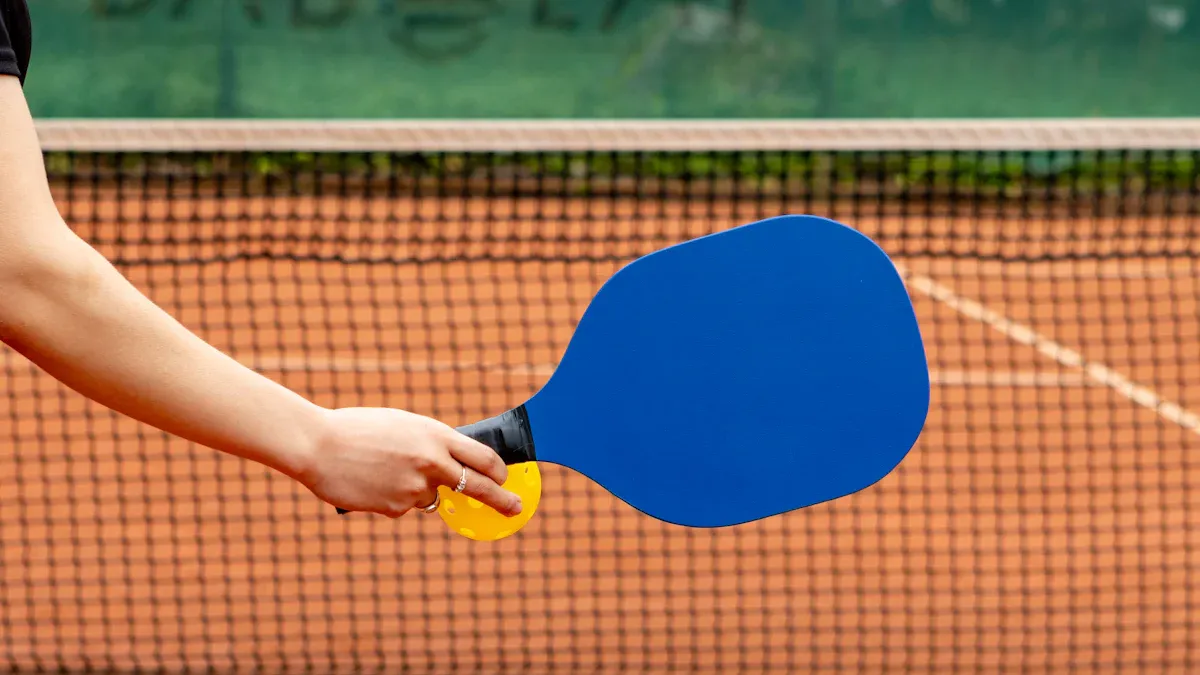
Your fingers play a big role in how you hold paddle and control your shots. Place your index finger slightly apart from the rest, almost like you are pointing down the handle. This small gap gives you more stability and helps guide the paddle. Your thumb should rest on the opposite side, giving you balance. The rest of your fingers wrap around the handle, but don’t squeeze too hard. Think of it like holding a tube of toothpaste—you want control, not a mess.
Tip: If your hand feels tense, shake it out and reset your grip. A relaxed hand moves faster and reacts better.
Grip Pressure
You want to hold paddle with just enough pressure to keep it steady, but not so much that your knuckles turn white. Most coaches say to grip it like you would hold a small bird—firm enough so it doesn’t fly away, gentle enough so you don’t hurt it. If you feel your arm or wrist getting tired, you might be gripping too tight. Try to relax your hand between points.
- Light grip: Better for soft shots and dinks.
- Medium grip: Good for most rallies.
- Firm grip: Use only for power shots.
Paddle Positioning
Where you hold paddle matters a lot during play. In the ready stance, keep the paddle up and in front of your body, with the tip pointing slightly toward your non-dominant side. This helps you react to fast shots, especially at the net. Many top players use their backhand for most volleys at the kitchen line because it’s easier on the wrist. Try standing in front of a mirror and practice your ready position. Notice how your paddle naturally points a bit to the side, not straight ahead.
Smart paddles and coaching apps now give instant feedback on your paddle angle and swing. These tools help you adjust your positioning for better control and power. Data from sensors and video analysis show that players who keep their paddle in the right spot react faster and make fewer mistakes. If you want to defend or block at the net, swivel your upper body at the hips while keeping your feet square to the net. This keeps your paddle tracking the ball and helps you cover more ground.
| Play Scenario | Paddle Positioning Tip |
|---|---|
| Ready Stance | Paddle up, tip toward non-dominant side |
| Net Play | Use backhand, paddle in front, slight angle |
| Defense | Swivel upper body, keep paddle tracking the ball |
Try out different ways to hold paddle and see what feels right for you. Start with a neutral or continental grip, keep your hand relaxed, and adjust for each shot. Practicing new grips helps you find more comfort, power, and control. Enjoy the process and watch your game improve!
FAQ
How do I know if my grip is too tight?
If your hand feels tired or your knuckles turn white, loosen your grip. You want your hand relaxed so you can move fast.
Can I switch grips during a game?
Yes! You can change grips between shots. Try different grips to see what helps you hit better and feel more comfortable.
What size paddle grip should I use?
Tip: Pick a grip size that feels comfy in your hand. If your fingers wrap around and touch your palm, the size is just right.