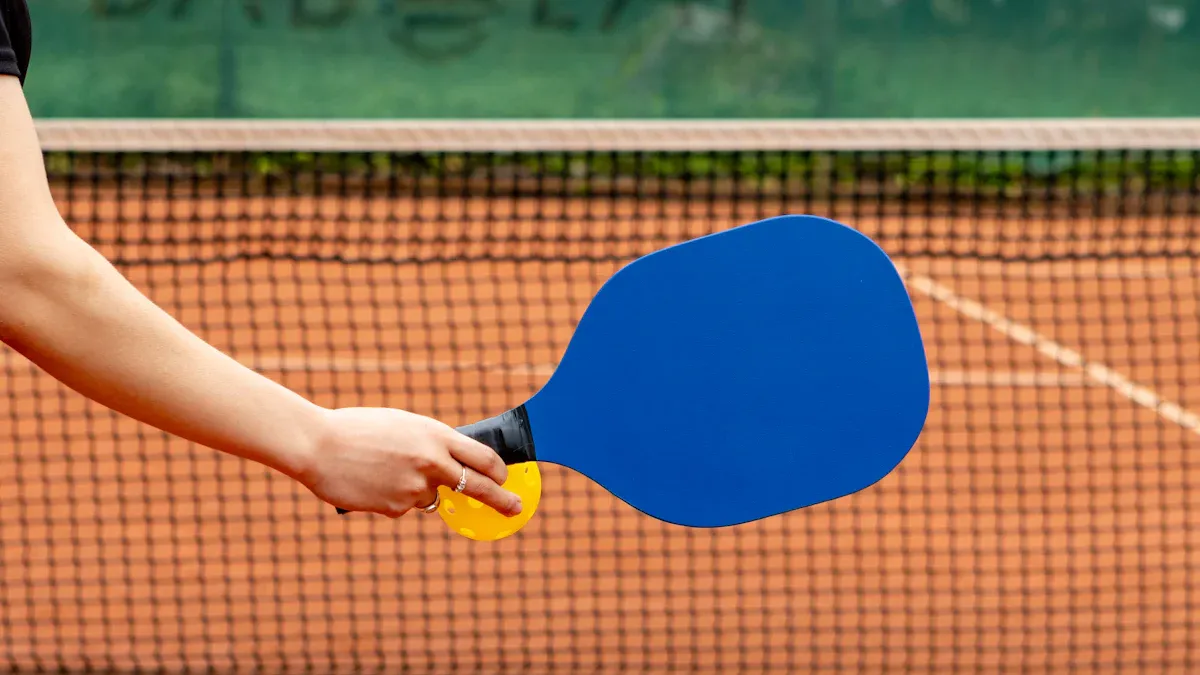
So, what is the proper way to hold paddle when you step onto the pickleball court? You want to use the Eastern grip, sometimes called the neutral grip. This grip feels like a friendly handshake with your paddle. It helps you control your shots and keeps your hand comfortable, even during long games. Get ready to learn how to hold paddle the right way and boost your confidence on the court!
Key Takeaways
- Start with the Eastern grip, which feels like a handshake and helps you control shots comfortably.
- Keep your grip relaxed to avoid hand fatigue and improve wrist movement for better control.
- Adjust your paddle angle for different shots: open for soft volleys and closed for powerful drives.
- Try different grips as you improve to find what feels best and adds variety to your game.
- Practice grip pressure and paddle position regularly to boost your confidence and shot accuracy.
How to Hold Paddle
Eastern (Neutral) Grip
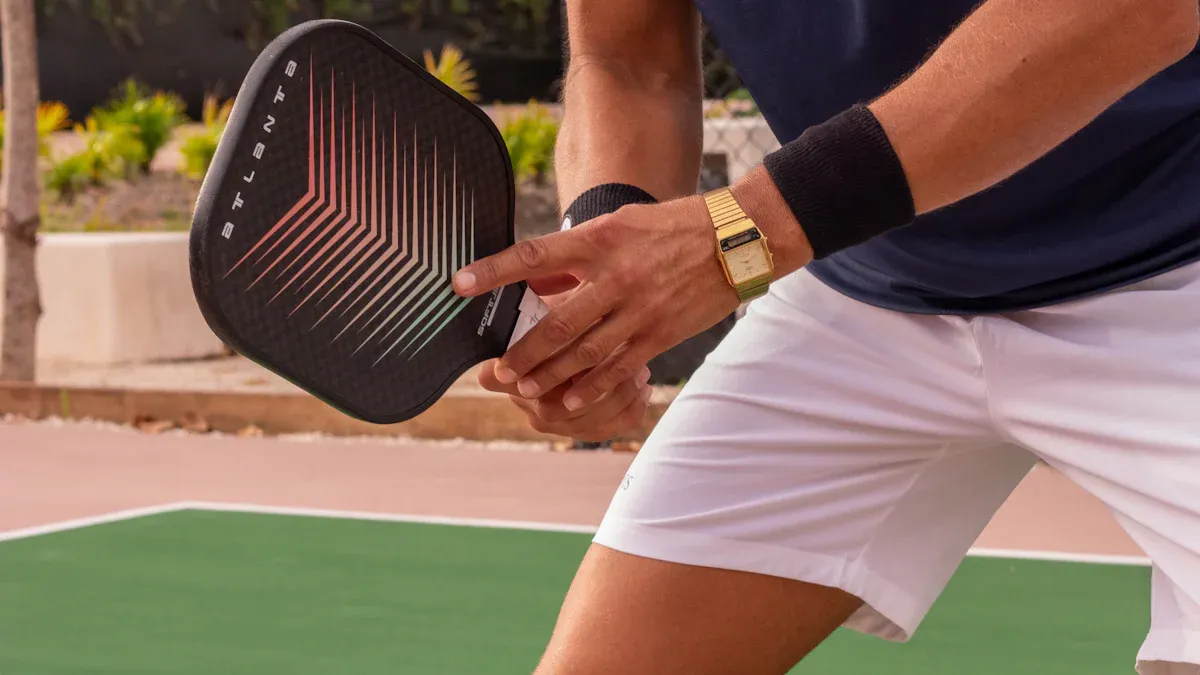
The Eastern grip is the most popular way to hold paddle in pickleball. You might hear people call it the “handshake grip” because it feels just like shaking hands with someone. This grip helps you stay ready for any shot and keeps your hand comfortable during long rallies.
Find the Eastern Grip
Let’s break it down step by step so you can find the Eastern grip every time:
- Place your playing hand flat on the face of your paddle.
- Slide your hand down until you reach the handle.
- Wrap your fingers around the handle, just like you would if you were shaking someone’s hand.
- Make sure your thumb and index finger form a “V” shape that points toward you.
- Hold paddle out in front of your body, with the paddle face standing up and ready.
Tip: Your grip should feel natural and relaxed. If your hand feels tense or cramped, loosen your hold a little. A relaxed grip gives you better control and helps your wrist move freely.
Why Eastern Grip
You might wonder why coaches and pros recommend the Eastern grip when you first learn to hold paddle. Here’s why:
- The Eastern grip lines up your paddle with your forearm. This makes your forehand shots feel smooth and powerful.
- You can switch to backhand shots quickly without changing your grip. This saves time and helps you react faster during fast rallies.
- The grip gives you good angles for both power and spin. You can block, volley, or add spin to your shots with ease.
- Experts say this grip helps you avoid bad habits and keeps your hand comfortable, even when you play for a long time.
When you start with a relaxed grip, you keep your hand and wrist loose. This lets you move the paddle quickly and adjust to different shots. If you squeeze the handle too tightly, your arm gets tired faster and you lose control.
Remember: The best way to hold paddle is the one that feels comfortable and lets you play your best. Start with the Eastern grip, keep your hand relaxed, and you’ll be ready for anything on the court!
Other Grip Types
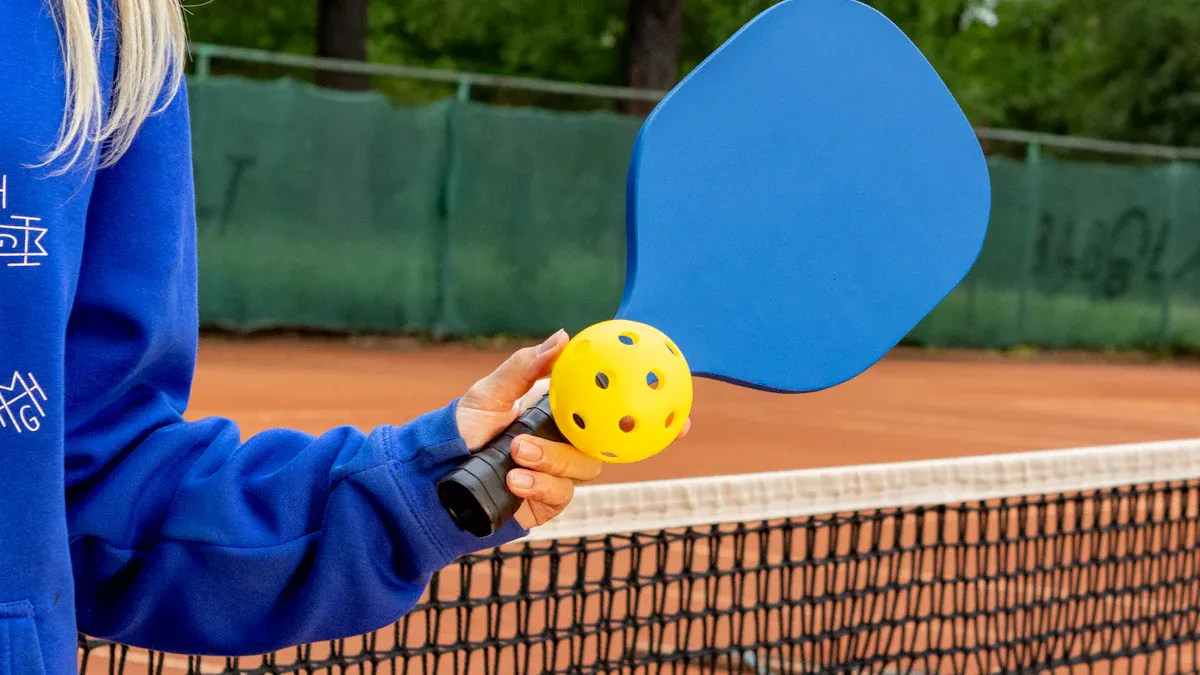
You might start with the Eastern grip, but you can try other ways to hold your paddle as you get more comfortable. Each grip changes how you hit the ball and how your hand feels during play. Let’s look at three popular options.
Continental Grip
The Continental grip feels like you are holding a hammer. Place your hand on the paddle so your thumb and index finger form a “V” on top of the handle. This grip works well for quick volleys and blocks at the net. You can switch between forehand and backhand without moving your hand.
Pros:
- Great for fast reactions at the net.
- Easy to switch between shots.
Cons:
- Harder to hit strong forehand drives.
- Less power for topspin shots.
Tip: Try the Continental grip if you like playing close to the net or want to react quickly to fast balls.
Tennis Grip
If you play tennis, this grip might feel natural. You hold the paddle like a tennis racquet, with your hand slightly behind the handle. This grip helps you hit powerful forehands and create topspin.
Here’s a quick look at how the Tennis grip compares to others:
| Grip Type | Advantages | Limitations |
|---|---|---|
| Eastern Grip | More power on forehand, easy topspin, comfortable | Less effective for backhand, less versatile at net |
| Western Grip | Heavy topspin, great control on high shots | Not ideal for backhand, less versatile, uncomfortable |
| Semi-Western Grip | Good balance of power and control, comfortable | Needs grip change for backhand, less effective at net |
| Two-Handed Backhand | More power and stability on backhand | Less reach, needs grip switch for forehand |
Pros:
- Strong forehand shots.
- Easy to add topspin.
Cons:
- Not as good for backhand or quick net play.
Penhold Grip
The Penhold grip looks like you are holding a pen. Place your thumb and index finger on one side of the paddle handle, with the rest of your fingers curled around the back. This grip gives you lots of wrist movement and control for soft shots.
Pros:
- Great for quick flicks and soft touches.
- Lots of wrist action for tricky shots.
Cons:
- Hard to hit strong backhands.
- Less reach for some shots.
You might want to try these grips if you want to change your style, add new shots, or find what feels best for your hand. Experimenting with different grips can help you discover your strengths and make your game more fun!
Grip Pressure and Paddle Position
Relaxed Grip
When you hold paddle, try not to squeeze it too hard. A relaxed grip helps you play longer without your hand getting tired. Most coaches suggest you keep your grip pressure at about a 4 out of 10. This means your hand feels secure, but not stiff. If you grip too tightly, your wrist cannot move well, and you might lose control of your shots.
A relaxed grip lets you react faster to the ball. You can switch from forehand to backhand quickly. You also get better control for soft shots like dinks and volleys. If you want to improve, practice holding the paddle with different grip pressures. Notice how your shots change. Ask a coach or a friend to watch and give you tips.
Tip: If your knuckles turn white or your hand feels sore, loosen your grip a little. Your paddle should feel like an extension of your arm, not a heavy tool.
Paddle Angle
The way you angle your paddle changes how the ball moves. For volleys, keep the paddle face slightly open. This helps you block the ball and send it back over the net. For groundstrokes, keep the paddle more vertical. This gives you power and keeps the ball low.
Try these simple adjustments:
- Open the paddle face for soft shots near the net.
- Close the paddle face a bit for drives and smashes.
- Keep your wrist loose so you can change angles quickly.
Shot Adjustments
Every shot in pickleball needs a little tweak. When you want to add spin, use your wrist and adjust the paddle angle. For soft touch shots, lighten your grip and let the paddle do the work. If you need more power, firm up your grip just a bit, but do not squeeze too hard.
Here are some ways grip pressure and paddle position help your game:
- You get more consistent shots when your grip is relaxed.
- You react faster to your opponent’s moves.
- You control soft shots better, so you do not over-hit.
- Practice drills with different grip pressures help you learn what works best.
- Feedback from others can help you fine-tune your grip and paddle angle.
Remember, comfort and control matter most. If your hand feels good and your shots go where you want, you are on the right track. Keep practicing, and you will master how to hold paddle for every shot.
Start with the Eastern grip when you first hold paddle. This grip gives you comfort and control. As you play more, try different grips to see what feels best. Many players find that customizing their grip with foam or ergonomic handles helps them play longer and feel less tired. You might notice more confidence and better shots when your paddle fits your hand. Keep your grip relaxed and adjust your paddle angle for each shot. Stay curious, keep practicing, and enjoy every game you play! 🏓
FAQ
How tight should you hold your pickleball paddle?
You want a grip that feels secure but not stiff. Imagine holding a tube of toothpaste without squeezing any out. If your hand feels tired or your knuckles turn white, loosen up a bit.
Can you switch grips during a game?
Yes! You can change grips between points or even during play. Many players start with the Eastern grip and then try others as they get more comfortable. Find what works best for you.
What if your hand gets sore while playing?
If your hand feels sore, take a short break. Try loosening your grip or adjusting your paddle handle. You can also use grip tape or a padded grip for extra comfort.
Do you need special gloves for pickleball?
You don’t need gloves, but some players like them for extra grip or to prevent blisters. Try playing without gloves first. If your hand slips or feels uncomfortable, a glove might help.