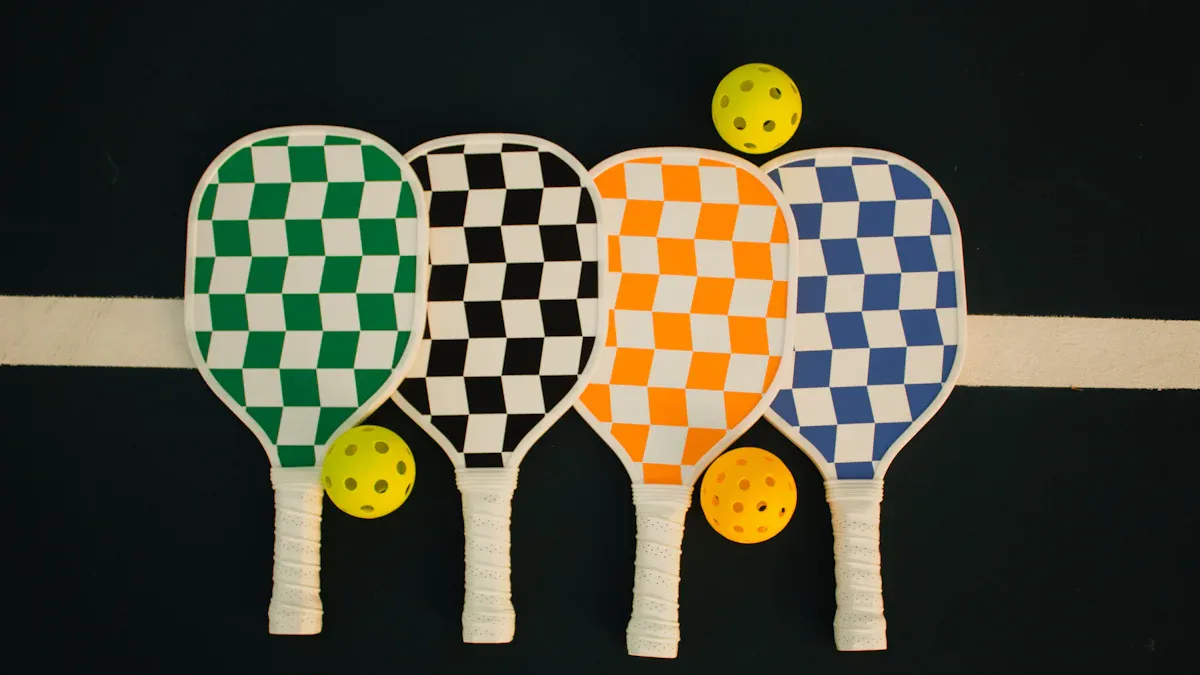
You can immediately notice the difference between paddles as soon as you hold them. Factors like paddle shape, weight, material, and core thickness all play a significant role. These elements directly affect how you play. For example, elongated paddles (16.5 x 7.5 inches) offer more reach and power, while widebody paddles provide better control and a larger sweet spot. The material also matters: carbon fiber faces enhance ball control, whereas fiberglass faces deliver more power. Even slight weight differences (7.8–8.2 oz) can influence your swing speed and the feel of your hits. Understanding the difference between paddles helps you choose the right one for power, control, and overall feel. That’s why paddles can feel so distinct.
| Paddle Shape | Size (inches) | Performance |
|---|---|---|
| Elongated | 16.5 x 7.5 | More reach and power |
| Standard | 16 x 8 | Balanced control |
| Widebody | <16 length | Greater sweet spot, control |
Key Takeaways
- Pickleball paddles are different in shape, weight, material, and core thickness. These things change how much power, control, and feel you have on the court. Elongated paddles give you more reach and power. Widebody paddles have a bigger sweet spot and more control. Standard paddles give you a mix of both. Light paddles help you control the ball and swing fast. Heavy paddles give you more power but can make your arm tired faster. Carbon fiber and graphite make paddles faster and easier to control. Core thickness changes how hard or soft the paddle feels. Taking care of your paddle, like cleaning it and storing it safely, helps it last longer and work better.
Key Differences
Shape
Pickleball paddles come in several shapes, and each shape changes how you play.
- Elongated paddles measure about 16.5 inches long and 7.5 inches wide. You get more reach and power, but the sweet spot is smaller.
- Standard paddles are about 16 inches by 8 inches. These give you a balance of control and power.
- Widebody paddles are wider, usually 8.5 inches, and shorter. You get a bigger sweet spot and more forgiveness, but less reach.
Tip: If you want more reach and spin, try an elongated paddle. For easier control, a widebody shape works best.
Weight
Weight is one of the most important factors in the difference between paddles.
- Lightweight paddles (7.2–7.8 oz): Easier to swing, better for control, but you need more effort for power.
- Midweight paddles (7.7–8.4 oz): Good balance of power and control. Many beginners start here.
- Heavy paddles (8.5+ oz): More power, but can tire your arm and are harder to control.
| Weight Class | Power | Control | Fatigue Risk |
|---|---|---|---|
| Lightweight | Low | High | Low |
| Midweight | Medium | Medium | Medium |
| Heavy | High | Low | High |
Swingweight and twistweight also matter. Higher swingweight gives you more power but less maneuverability. Higher twistweight means a bigger sweet spot and better control.
Material
The material of your paddle face and core changes how it feels and performs.
- Composite (fiberglass or carbon fiber): Offers good spin and control. Carbon fiber gives you more speed and stability.
- Graphite: Lightweight and responsive, great for quick shots.
- Polymer core: Soft feel and less vibration, good for beginners.
- Nomex core: Harder and louder, gives more power but less forgiveness.
Note: Carbon fiber paddles often outperform basic materials in speed and stability.
Core Thickness
Core thickness affects both power and control.
- Thinner cores (12–14 mm): More power and faster rebound. Aggressive players often choose these.
- Thicker cores (16 mm or more): More control and a softer feel. The ball sinks deeper, so you get better shot placement and less vibration.
Research shows that thinner cores give you more “pop,” while thicker cores help you control the ball. This is a key difference between paddles that you will notice as you play.
Difference Between Paddles
Power vs. Control
When you pick up a pickleball paddle, you can feel the difference between paddles designed for power and those made for control. The design and materials of each paddle play a big role in how much force you can put behind your shots and how easily you can place the ball where you want.
- Power paddles usually have a softer face and a heavier swing weight. These paddles use a trampoline effect to add energy and spin to your shots. You get more speed, but you need to hit the sweet spot for the best results. Players with strong arms and quick footwork often prefer these paddles.
- Control paddles have a harder face and a lighter swing weight. These paddles give you more forgiveness if you miss the sweet spot. You can place the ball with more accuracy, but you will not get as much extra power from the paddle itself. Many beginners and intermediate players like this style because it helps them keep the ball in play.
Tip: If you want to hit harder and add spin, try a power paddle. If you want to place your shots and keep rallies going, a control paddle may suit you better.
You can see the difference between paddles in scientific tests. Researchers use digital force gauges to measure how much a paddle face bends under different loads. Softer paddles, like the Selkirk Invikta Power Air, have a stiffness of about 1290 lb/in and are called “power” paddles. Harder paddles, such as the Selkirk Omni Amped X5, reach up to 2091 lb/in and are known as “control” paddles. Most paddles fall somewhere in between, offering a mix of both qualities.
| Paddle Type | Face Stiffness (lb/in) | Main Benefit | Best For |
|---|---|---|---|
| Power Paddle | <1400 | More power, spin | Advanced, strong players |
| Control Paddle | >1600 | More accuracy | Beginners, consistent players |
| Hybrid Paddle | 1400-1600 | Balanced feel | Most players |
Performance tests also measure power by tracking ball speed with radar guns. Control is checked by mapping the sweet spot and asking players about shot accuracy. Spin is measured by counting ball rotations per minute. These tests help you understand how each paddle will perform on the court.
Feel and Handling
The feel and handling of a paddle come from its weight, core thickness, face material, and even the shape of the handle. You notice the difference between paddles as soon as you swing them.
- Weight: Lighter paddles (6-8 oz) are easier to move and control. You can react quickly at the net and avoid arm fatigue. Heavier paddles (8-14 oz) give you more power and stability, but they can slow you down and tire your arm faster. Midweight paddles (8-10 oz) offer a balance between the two.
- Core Thickness: Thicker cores (16 mm or more) absorb more shock and give you a softer touch. You get better control and less vibration in your hand. Thinner cores (12-14 mm) make the paddle feel more lively and powerful, but you may lose some control.
- Face Material: Carbon fiber faces give you a crisp, responsive feel and help with control. Fiberglass faces add power and spin. Composite faces blend both qualities. Some paddles use Kevlar for extra durability and less vibration.
- Shape and Handle: Widebody paddles have a larger sweet spot and are easier for beginners. Elongated paddles give you more reach and power, which advanced players often like. Handle length also matters. Longer handles help with two-handed shots, while shorter handles make the paddle easier to maneuver.
Note: The right paddle for you depends on your skill level, strength, and playing style. Try different shapes and materials to find what feels best in your hand.
Manufacturers test paddles for vibration, durability, and spin. They use high-speed cameras to measure spin and sensors to check how much shock travels to your arm. These tests show that the difference between paddles is not just about looks. It is about how each paddle helps you play your best game.
Paddle Types
Standard
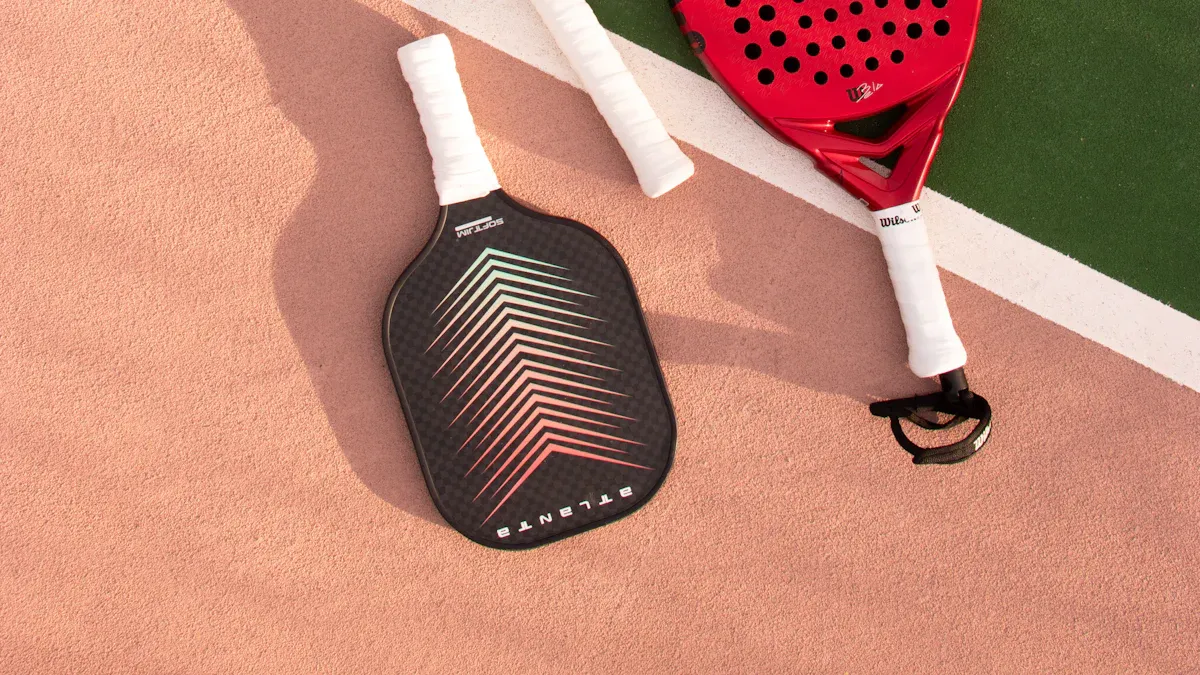
Standard paddles are the most common on the court. They are about 16 inches long and 8 inches wide. These paddles give you a good mix of power and control. They are easy to move and feel comfortable in your hand. Most beginners and intermediate players use standard paddles. Reviews show that standard paddles, like the Franklin C45, have a bigger sweet spot. They also offer better stability than other paddle types. You do not need to add weight to play well with them. The honeycomb core and composite face help in many game situations. This balance is why standard paddles are so popular.
Tip: If you want a paddle for any style, try a standard one.
Elongated
Elongated paddles are longer and thinner than standard paddles. They are about 16.5 inches long and 7.5 inches wide. You get more reach, so you can hit balls farther away. Many advanced players like elongated paddles for extra power and spin. The shape gives you a smaller sweet spot. You need good aim and timing to use them well. If you play aggressively or want more spin, this type is a good choice. You can really see the difference in reach and power compared to standard paddles.
Widebody
Widebody paddles are shorter and wider than other types. They are usually about 8.5 inches wide. You get a bigger sweet spot and more forgiveness on missed hits. This helps beginners and players who want more control. But widebody paddles can feel heavier and harder to move fast. The table below shows how paddle width changes handling:
| Paddle Width (inches) | Swing Weight | Twist Weight | Balance Point (cm) | Static Weight (oz) | Effect on Maneuverability |
|---|---|---|---|---|---|
| ~7.5 | Lower | Lower | Lower | Lighter | Quicker handling, better control |
| ~8.0 | Higher | Higher | Higher | Heavier | More power, less maneuverability |
Wider paddles give you more power and stability. But you might lose some speed at the net.
Specialty
Specialty paddles have special shapes or features. Some have longer handles for two-handed shots. Others have textured faces for more spin. Some use special materials or cores to reduce vibration or last longer. These paddles are best for players with special needs or advanced skills. If you want to try something new or fix a problem in your game, a specialty paddle could help.
Note: Try different paddle types to find what feels best for you.
Choosing a Paddle
Beginners
If you are new to pickleball, you want a paddle that feels easy to handle. Lightweight paddles help you control your shots and move quickly. Look for a standard shape with a large sweet spot. This makes it easier to hit the ball cleanly. A thicker core gives you a softer feel and reduces vibration. You should also check the grip size. A smaller grip fits most hands and helps you learn proper technique. Many beginners notice the difference between paddles when they try different weights and shapes.
Tip: Start with a midweight paddle if you are unsure. It gives you a good balance of power and control.
Intermediate
As you improve, you may want more options. Midweight paddles offer both power and control. You can try different materials like graphite or composite faces. These materials help you add spin and speed to your shots. You might also want to test different core thicknesses. Thinner cores give you more power, while thicker cores help with control. Try paddles with different handle lengths to see what feels best for your grip.
Advanced
Advanced players often choose paddles for specific needs. If you want more power, pick a heavier paddle with a thinner core. For more control, select a lighter paddle with a thicker core. Some advanced paddles have textured faces for extra spin. You can also find specialty shapes, like elongated paddles, for more reach. Always match your paddle to your playing style and strengths.
Playing Style
Your playing style matters when picking a paddle. If you like fast volleys and quick reactions, choose a lighter paddle. For strong, powerful shots, a heavier paddle works better. Players who use two hands for backhands should look for longer handles. If you want more spin, try a paddle with a textured face. Always test different paddles to find what matches your game.
Paddle Care
Durability
You want your pickleball paddle to last as long as possible. The right care can help you avoid cracks, dents, and worn-out surfaces. Paddle durability depends on the materials and how you use the paddle. Carbon fiber and graphite paddles usually last longer than basic wood or plastic paddles. Polymer cores resist dents and keep their shape well.
Here are some ways to boost your paddle’s durability:
- Store your paddle in a padded case when you are not playing.
- Keep your paddle away from extreme heat or cold. High temperatures can warp the core. Cold can make the surface brittle.
- Avoid hitting the ground or fence with your paddle. Hard impacts can cause chips or cracks.
- Wipe off sweat and dirt after each game. Moisture can weaken the glue and surface.
Tip: If you see small cracks or chips, stop using the paddle until you check it. Small damage can get worse quickly.
Maintenance
Regular maintenance keeps your paddle performing at its best. You do not need special tools or cleaners. Simple steps work well.
Basic Paddle Maintenance Checklist:
- Clean the paddle face with a damp cloth. Do not use harsh chemicals.
- Dry the handle and grip after each use. This prevents mold and keeps your grip strong.
- Check the edge guard for loose spots. Press it back in place if needed.
- Replace the grip tape if it feels slippery or worn out.
| Maintenance Task | How Often | Why It Matters |
|---|---|---|
| Wipe paddle face | After each use | Removes dirt and sweat |
| Dry grip | After each use | Prevents odor and mold |
| Inspect edge guard | Weekly | Stops chips and cracks |
| Replace grip tape | As needed | Keeps grip comfortable |
You can keep your paddle in top shape with these easy steps. Good care helps you play better and saves you money on replacements.
You now know the main difference between paddles comes from shape, weight, material, and core thickness. Each factor changes how you play and feel on the court. Try different paddles to see what fits your skill level and style. Start with a standard paddle if you are unsure. Always check how each paddle affects your power and control. The right choice helps you enjoy the game more.
FAQ
What is the best pickleball paddle for beginners?
You should start with a midweight, standard-shaped paddle. This type gives you a good mix of power and control. Look for a paddle with a large sweet spot and a comfortable grip. You will find it easier to learn the basics.
How often should you replace your pickleball paddle?
Most players replace their paddle every 1–2 years. If you play often or notice cracks, chips, or a worn-out grip, you should get a new paddle sooner. Regular care helps your paddle last longer.
Does paddle color affect performance?
Paddle color does not change how you play. Manufacturers use color for style and branding. You can choose any color you like. Focus on shape, weight, and material for better performance.
Can you use a tennis racket for pickleball?
You cannot use a tennis racket for pickleball. The rules require a paddle, not a strung racket. Pickleball paddles have a solid face and smaller size. This design helps you control the ball better.
How do you clean a pickleball paddle?
Wipe the paddle face with a damp cloth after each game.
Dry the grip to prevent mold.
Do not use harsh cleaners or soak the paddle in water.
Regular cleaning keeps your paddle in top shape.